You stepped outside. The sky opened. And now your hair is... different.
If you have *4C hair, rain isn't just water. It's a transformation trigger. Shrinkage activates. Frizz appears. Definition disappears. And whatever style you had is now a memory.
But here's the thing: what you do in the first 10 minutes determines whether your hair recovers or stays ruined.
First, Understand What's Happening
Rain does three things to 4C hair.
1. Shrinkage activation. Water breaks hydrogen bonds. Your coils tighten to their maximum shrinkage. What was shoulder-length becomes ear-length in seconds. 2. Frizz creation. Rain isn't distilled water. It contains minerals, pollutants, and who knows what else. These disrupt your cuticle layer. Cue the frizz. 3. Product displacement. Your carefully applied products? They're running down your face or getting diluted. The structure they provided? Gone.This isn't your hair being difficult. It's physics.
The First 10 Minutes: What to Do Immediately
Minute 1-2: Get InsideBut here's what most people miss: don't touch your hair yet. Your instinct is to squeeze, pat, or rub. Don't. Wet 4C hair is at its most fragile. Rubbing creates friction. Friction creates breakage. Just get inside and let the initial dripping stop naturally.
Minute 3-4: Assess the SituationLook at your hair. Ask yourself: Was it in a protective style? Was it washed and styled fresh? Was it day 3-4 hair? How much rain actually hit it?
Your next move depends on these answers.
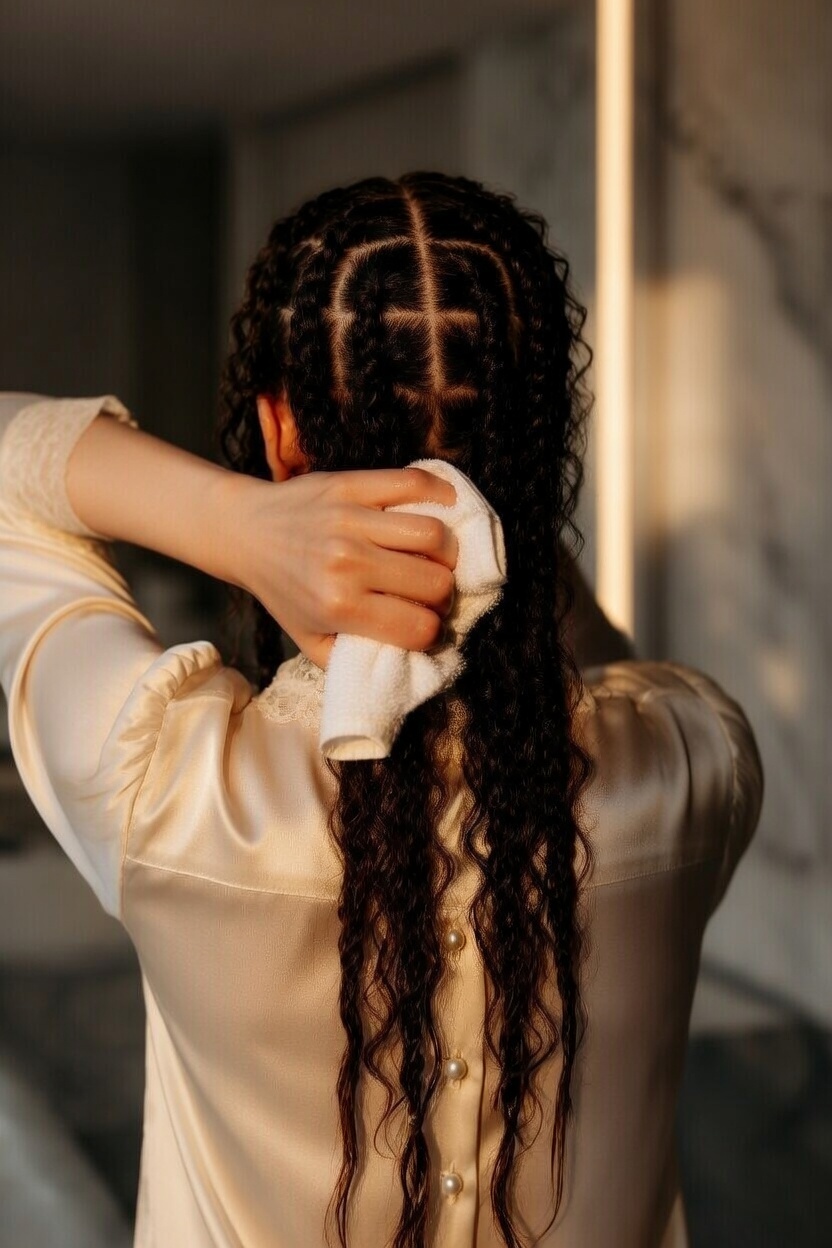
Minute 5-7: Choose Your Path Path A: If you were in a protective style (braids, twists, faux locs)You're actually in good shape. Protective styles handle rain better than loose hair.
- Gently squeeze excess water from each braid or twist (don't rub)
- Pat with a cotton t-shirt or microfiber towel
- Let air dry if possible
- If you must dry faster, use a hooded dryer on low never diffuse directly on protective styles
 Path B: If you had freshly washed and styled hair
This hurts the most. You spent hours on this.
- Do NOT rake or disturb the pattern
- Lightly scrunch with a cotton t-shirt (microfiber can create frizz on 4C)
- If you have a refresh spray or diluted leave-in, mist lightly and scrunch again
- Diffuse on low heat if you need it dry fast
- Accept that it won't look the same as pre-rain but it can look good
Honestly? This might be a wash day now. Day 3-4 hair already has buildup, some lint, and fading definition. Rain adds chaos to that mix.
- Let it dry completely (yes, with the shrinkage and frizz)
- Once dry, assess if it's salvageable
- If it's a tangled mess, wash and restart
- If it's just shrunken but not tangled, try a light refresh spray and finger coil
What NOT to Do
Don't Brush or Comb Wet 4C HairWet 4C hair is elastic. It stretches. Then it snaps. Brushing wet 4C hair is a breakage guarantee. If you must detangle, do it in the shower with conditioner and a wide-tooth comb. Not now. Not with rain water.
Don't Add Heavy Products ImmediatelyRain already diluted what was there. Adding heavy butter or cream on top of wet hair creates a weird, gummy texture that takes forever to dry and feels gross. Let it dry first. Then assess.
Don't Use Heat Without ProtectionIf you're diffusing, use a heat protectant. If you don't have one, air dry is better than heat damage.
Don't Re-twist or Re-braid Wet HairWet manipulation = breakage. If you want to re-style, wait until hair is at least 80% dry.
The Recovery Timeline
1 Hour After Rain Your hair is probably still damp. Shrinkage is maxed. Frizz is visible. This is the ugly phase. Don't panic. 3-4 Hours After Rain If you air dried, your hair has settled into its rain state. Some people actually like the extra volume 4C gets after rain. It's different, not necessarily bad. Next Morning This is decision time. Is it tangled? Wash day. Is it just shrunken but soft? Refresh and go. Does it smell musty? Definitely wash (rain water can be gross).How to Prevent This Next Time
Option 1: Protective Styles for Rainy SeasonWhen forecast says rain, consider braids, twists, buns, or head wraps. These minimize exposed surface area. Less exposure = less rain damage.
Option 2: Water-Resistant ProductsSome products create a barrier. Look for silicone-based serums, butters with beeswax or petroleum, and anti-humidity sprays. Apply these on rainy days. They won't make you waterproof, but they help.
Option 3: The Emergency ScarfKeep a silk or satin scarf in your bag. If rain starts, wrap your hair. It's not a full solution but it's better than nothing.
When Rain Actually Helps 4C Hair
Counterintuitive, but true: sometimes rain is a reset.
If your hair was dry, product-caked, or just tired, rain can add moisture back. After it dries, you might find your hair feels softer and more responsive. Not always. But sometimes. The key is how you handle the drying phase gentle hands, no manipulation, let it do its thing.
The Bottom Line
Rain on 4C hair isn't a disaster. It's a disruption. How you handle the first 10 minutes determines whether you recover gracefully or spend the day frustrated.- Protective style → squeeze gently, pat dry
- Fresh style → scrunch with t-shirt, diffuse if needed
- Day 3-4 hair → let dry, then decide
- Any situation → don't brush, don't add heavy products
Your Hair, Your Rules
Some days you'll fix it. Some days you'll let it be. Some days you'll wash and restart. All of those are fine.
Two minutes. No guesswork. Just a routine built for your actual hair. Find Your 4C Routine →Quick Recap
- First 10 minutes matter most
- Don't touch wet hair immediately
- Don't brush or comb
- Protective styles are your rainy day friend
- Sometimes rain is a reset, not a disaster
- Let it dry before deciding next move