You've done the quizzes. You've stared at the charts. You've asked friends who just say "it's curly, who cares?"
But you care. Because every time you buy products based on your assumed type, they don't work. Every routine you follow leaves you frustrated. And somewhere in the back of your mind, you wonder: what if you've been wrong this whole time?
Here's the uncomfortable truth: most people are. Not because they're clueless. Because curl pattern identification is taught wrong.
Why Traditional Curl Charts Fail You
Problem 1: Charts Show Perfect HairEvery curl chart you've seen features hair that's freshly washed, perfectly styled, professionally lit, and often chemically enhanced. That's not real life. That's a catalog.
Problem 2: Charts Ignore Multiple PatternsThe Andre Walker chart assumes you have one type. But human scalps aren't uniform. The back of your head might be 4A while the front is 3C. The nape might be 3B. The crown might do whatever it feels like that day.
Problem 3: Charts Don't Account for DamageHeat damage, color damage, mechanical damage they all change how your hair curls. What you're seeing might be your hair's trauma history, not its natural state.
Problem 4: Charts Confuse Shrinkage With PatternTight shrinkage doesn't always mean tight curls. Some loose curls shrink a lot. Some tight curls shrink less.
Problem 5: Charts Can't See Through ProductGel casts hide true texture. Heavy creams weigh down waves. Mousses create faux patterns. You're not seeing your hair. You're seeing what you put on it.
The Preparation: Getting Your Hair to Zero
To identify your real curl pattern, you need a blank slate.
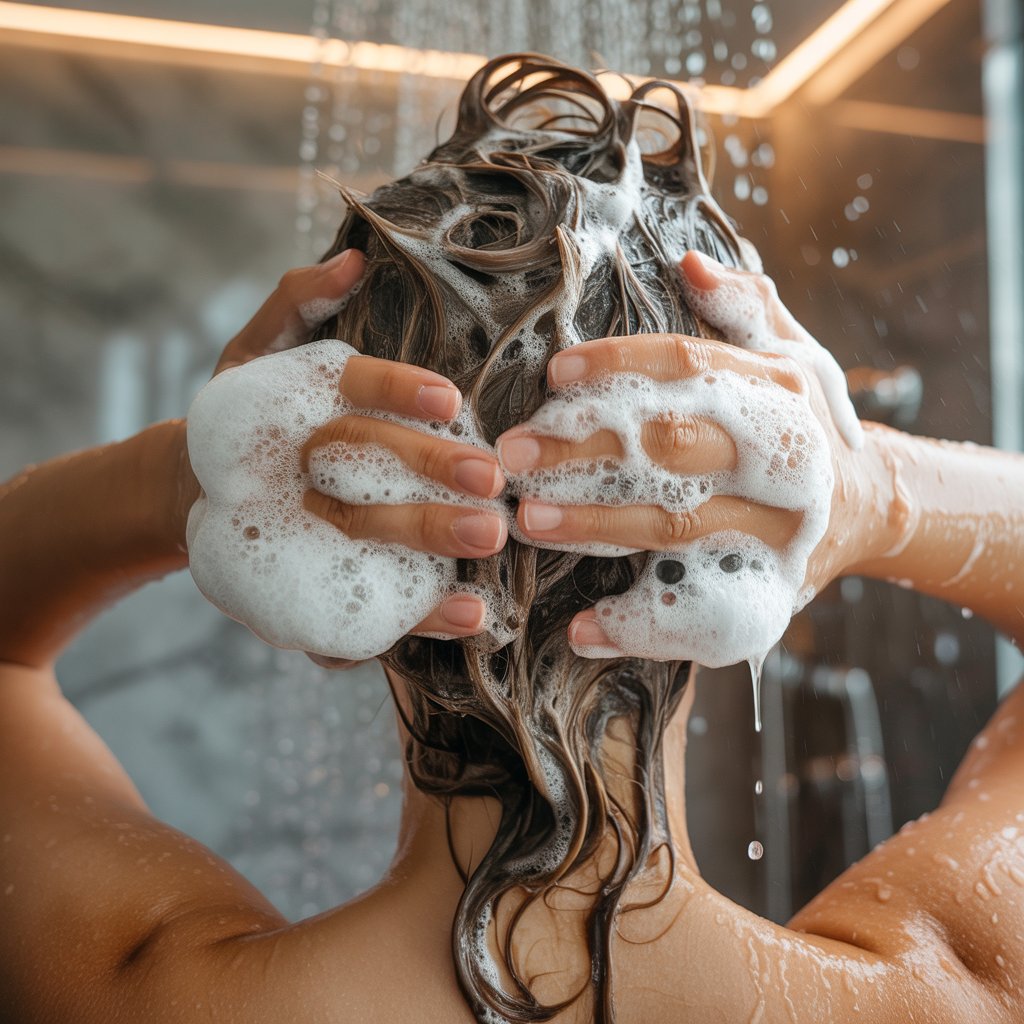
Step 1: ClarifyUse a clarifying shampoo with sulfates. You need to remove silicone buildup, product residue, hard water minerals, and oils and butters.
 Step 2: Skip Everything
After clarifying no conditioner, no leave-in, no gel, no cream, no oil, no touching. Just washed hair. Nothing else.
Step 3: Air Dry CompletelyDo not diffuse. Do not squeeze with a microfiber towel. Do not scrunch. Let it air dry with zero manipulation. This is your baseline. This is what your hair actually does when left completely alone.
The Observation Phase: What to Look For
Once your hair is 100% dry, observe section by section.
Look at the ShapeStand under bright light. Part your hair in multiple places.
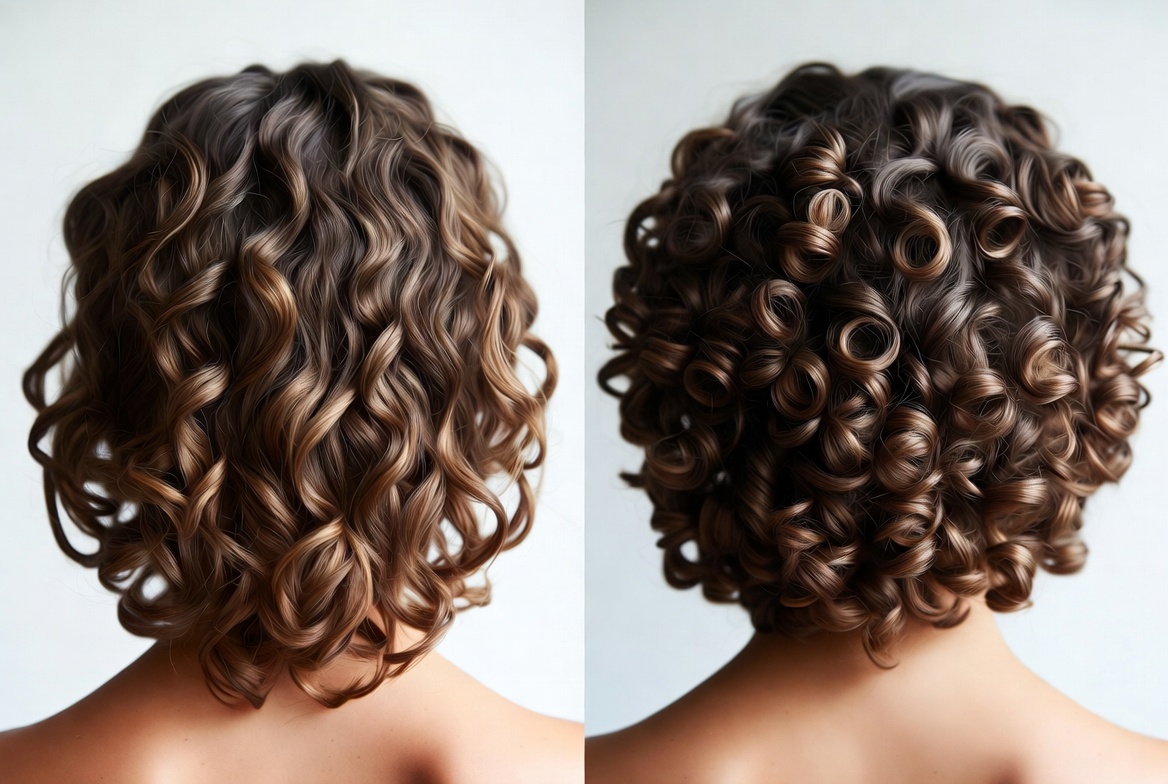
- No bend, just straight → Type 1
- Loose S-shape, like beach waves → Type 2A-2B
- Defined S-shape with some spirals → Type 2C-3A
- Corkscrew spirals → Type 3B-3C
- Tight coils, like a spring → Type 4A
- Z-shaped bends, less defined → Type 4B-4C
 Look at the Shrinkage
Take one strand. Gently stretch it to its full length. Measure. Then let go.
- 10-30% shrinkage → Wavy (Type 2)
- 30-50% shrinkage → Curly (Type 3)
- 50-70%+ shrinkage → Coily (Type 4)
Your roots tell the truth. If your roots are flat to the scalp likely wavy or looser curly. Lifting slightly curly. Lifting significantly coily. Forming coils at the root definitely coily.
Why? Because curl pattern starts at the follicle. If your hair is curling immediately, you're tighter. If it grows straight for an inch then bends, you're looser.
Look at the Clumps- Large, loose clumps → Wavy to loose curly
- Medium, defined clumps → Curly
- Small, tight clumps → Coily
- No clumps, just frizz → Needs moisture or has damage
The Multi-Pattern Reality
Here's what you'll probably find: different areas, different patterns.
The crown often has the loosest pattern. More sun exposure, more heat damage potential. The nape often has the tightest pattern. Friction from clothing, less visible, often neglected. The front hairline can be either. Baby hairs might be tighter. Edges might be looser from tension. The underside often has a different texture entirely. Less manipulation, less heat.Most people have one dominant pattern, one secondary, and one wildcard section.
How to Document Your Findings
For each section (crown, left side, right side, nape, front) write down: shape (S, spiral, coil, Z), shrinkage percentage, root behavior, and clump size.
Then ask: what's dominant? What's secondary? What's the outlier?
The 3-Day Verification
Day 1: Clarify, air dry, observe. Write it down. Day 2: Wet hair, apply nothing, air dry, observe. Is it the same? Day 3: Wet hair, apply a simple gel (just gel, nothing else), air dry, observe. Does product change what you see?If Day 1 and Day 2 match, that's your baseline. If Day 3 shows a different pattern, product is enhancing (or hiding) your real texture.
The Porosity Connection
Here's something almost no one talks about: porosity can mimic or mask curl patterns.
Low porosity hair often appears less curly than it actually is. The cuticles are tight, water runs off, products sit on top. Your 3B hair might look 2C because nothing penetrates. High porosity hair often appears more chaotic. The cuticles are open, moisture rushes in and out, frizz dominates. Your 3A hair might look like a 3C frizz-ball.If your pattern seems inconsistent, test porosity first.
The quick test: Take a clean strand. Drop it in a glass of water. If it floats, low porosity. If it sinks slowly, medium. If it sinks fast, high.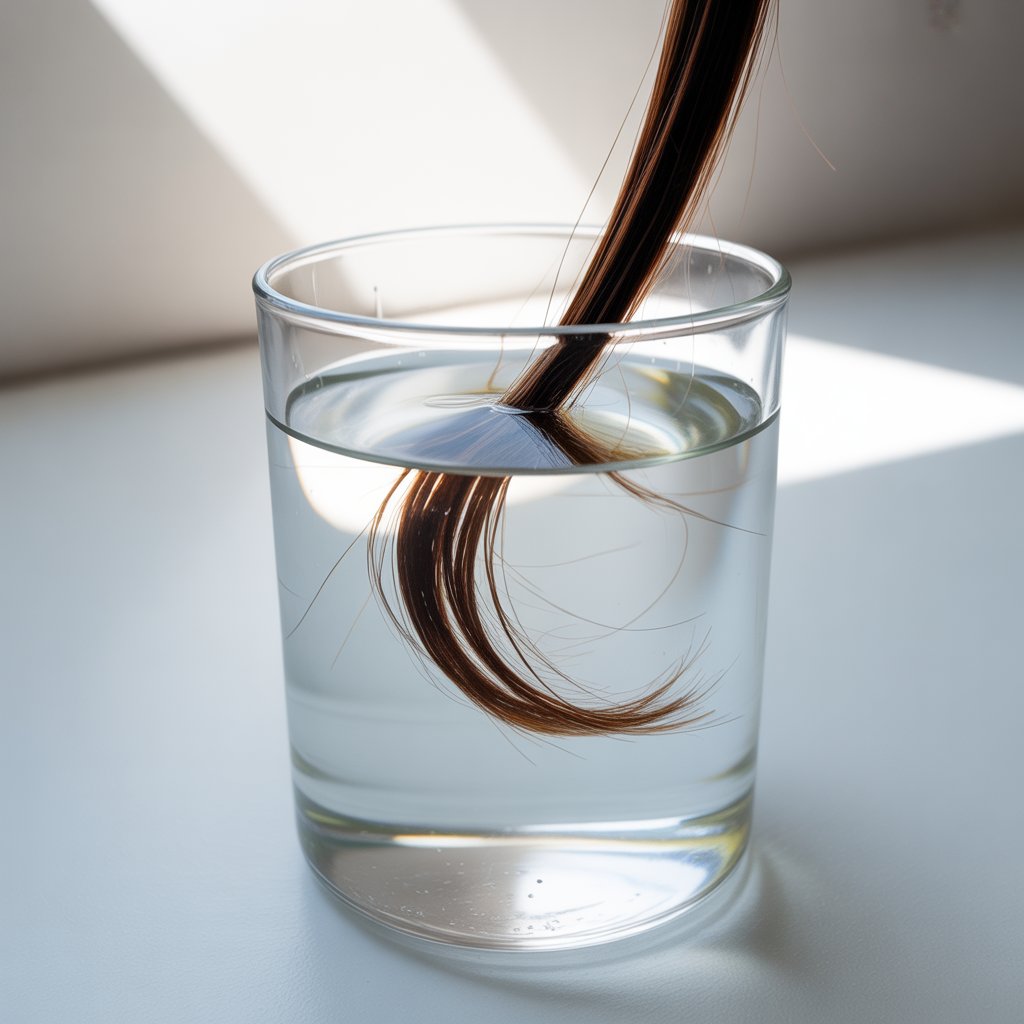
The Density Factor
High density hair (lots of strands per square inch) makes patterns look tighter. More hair = more coils packed together = looks curlier. Low density hair (fewer strands) makes patterns look looser. You see each strand individually, so it looks less curly.If you have low density but tight coils, your hair might look 3C but behave 4A. If you have high density but loose waves, your hair might look 3A but behave 2C.
Common Identification Errors
Error 1: Identifying Based on Wet Hair Wet hair stretches. Water weight pulls patterns loose. Only judge dry hair. Wet hair lies. Error 2: Identifying Based on Styled Hair Products manipulate texture. Judge naked hair. Nothing on it. Error 3: Identifying Based on One Section Your best curl isn't your average curl. Look at all sections. Average them. Error 4: Confusing Damage With Pattern Heat-damaged ends look different than your roots. Look at new growth. Your roots tell the truth. Error 5: Forgetting About Weather Humidity tightens patterns. Dry air loosens them. Identify in multiple seasons.What to Do With This Information
If you're wavy dominant (Type 2): Go lightweight. Mousses, foams, light gels. Avoid butters and heavy creams. Wash more frequently. If you're curly dominant (Type 3): Balance moisture and hold. Gels, curl creams, light oils. You need definition without weight. Regular deep conditioning. If you're coily dominant (Type 4): Prioritize moisture. Creams, butters, sealing oils. Layering is your friend. Protective styling helps retain length. For multiple patterns: Treat for the tighter pattern. Use products and techniques that work for your tightest sections. The looser parts will handle it. Section your application heavier products on tight parts, lighter on loose parts.From Identification to Action
The Hair Routine Generator takes everything into account your actual pattern (all of them), your porosity, your density, your environment, your lifestyle, and your goals.
Two minutes. No guesswork. Just a routine built for your real hair. Find Your Real Routine →Quick Reference: Your Identification Checklist
- Clarify with sulfates (one time only)
- Skip all products
- Air dry completely
- Observe each section
- Note shape, shrinkage, roots, clumps
- Identify dominant pattern
- Identify secondary pattern
- Note outliers
- Verify with 3-day test
- Test porosity separately
- Consider density
- Adjust expectations for seasons
The Truth About Labels
Labels help you shop. They help you communicate. They help you narrow down options. But they're not you.
Your hair is more complex than any chart. Use the label as a tool. Not an identity.
And when the label stops working? When the products don't perform? When the routine fails? Come back. Start over. Because hair changes. Seasons change. You change. And that's okay.