Every week, a new hair growth hack goes viral.
Someone posts a before-and-after. Comments explode. Thousands of people rush to their kitchens to make rice water, or hang upside down off their bed, or slather their scalp in castor oil before bed.
And then, six weeks later nothing. Or worse, something went wrong.
Here's the problem with viral hair growth content: it's optimized for views, not results. A dramatic before-and-after gets shared. An honest "this worked a little, for some people, under specific conditions" does not.
So let's be honest. We're going through the most viral hair growth tips of the last few years and asking one question for each: does the science actually support this?
First, Understand How Hair Actually Grows
Before testing any tip, you need to know what you're working with.
Hair grows from follicles in your scalp. Each follicle goes through three phases:
- Anagen (growth phase): Active growth, lasts 2-7 years
- Catagen (transition phase): Growth stops, lasts 2-3 weeks
- Telogen (resting phase): Hair rests then sheds, lasts 3-4 months
The average person grows about half an inch per month roughly 6 inches per year. That rate is largely genetic.
What you can do is minimize breakage (so length is retained, not just grown), support follicle health (so hair grows as fast as your genetics allow), and avoid habits that stunt growth (heat damage, tight styles, nutritional deficiencies).
Most viral hair growth tips actually address one of these three things not some magic acceleration of your follicles. Keeping that in mind changes how you evaluate every tip.
Tip 1: Scalp Massages
Viral claim: Massaging your scalp daily causes dramatic hair growth and thickness. The science: This one actually has research behind it. A 2016 study found that standardized scalp massages over 24 weeks increased hair thickness. The proposed mechanism: mechanical stimulation stretches dermal papilla cells, which may stimulate follicle activity. A 2019 survey of people who performed daily scalp massages found that 68.9% reported stabilized hair loss or increased hair growth. The catch: The studies used specific durations (9-11 minutes daily) and consistent technique. Scratching your scalp while watching TV is not the same thing. Verdict: Try it. Low risk, potentially meaningful benefit. Use fingertips (not nails), gentle circular motions, 5-10 minutes daily. Add an oil if you like the massage itself is the active ingredient, not what you put on it. Who benefits most: People with thinning hair, high-stress lifestyles (stress causes hair loss), or those who rarely stimulate their scalp.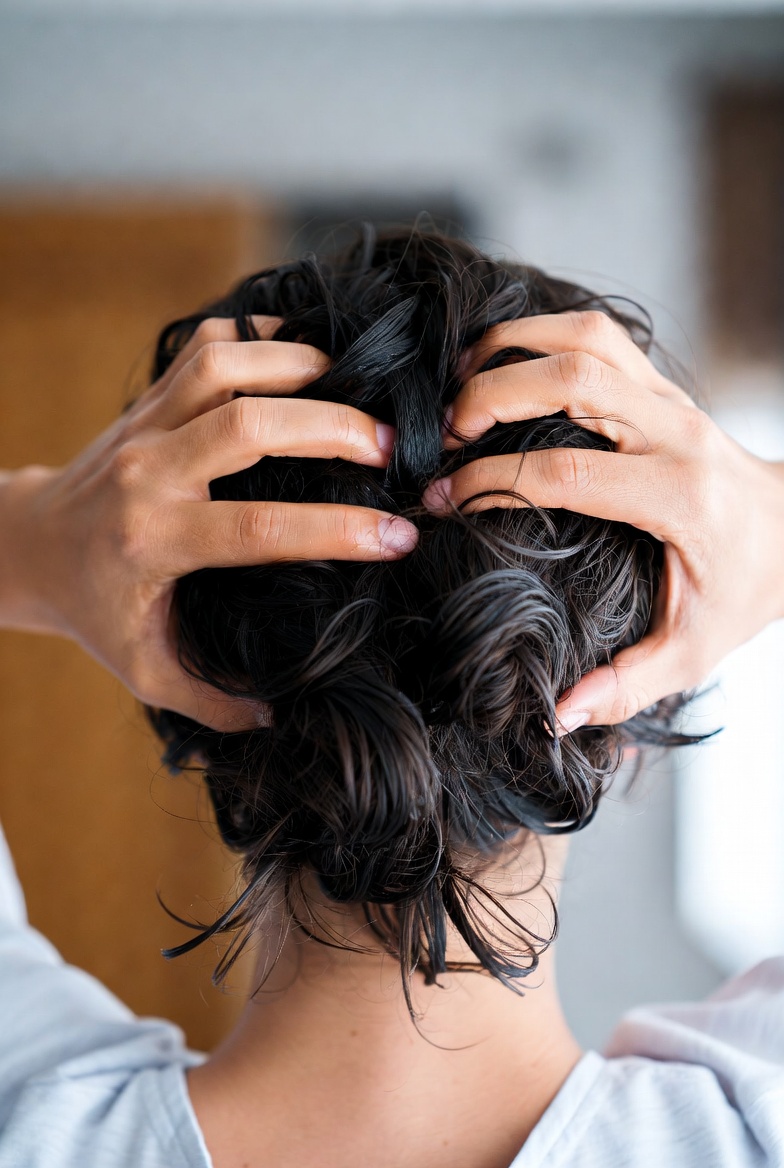
Tip 2: Rosemary Oil
Viral claim: Rosemary oil grows hair as effectively as minoxidil (Rogaine). The science: This is the most scientifically supported viral tip. A 2015 randomized controlled trial directly compared rosemary oil to 2% minoxidil in people with androgenetic alopecia. After 6 months, both groups showed similar hair count increases. Rosemary oil also caused less scalp itching than minoxidil.The proposed mechanism: rosemary may inhibit DHT (the hormone linked to pattern baldness) and improve scalp circulation.
The catch: The study was on people with androgenetic alopecia specifically. If your hair loss has a different cause, results may differ. Also, the study used a diluted concentration consistently dunking your head in rosemary oil is not the protocol. How to use it correctly:- Dilute rosemary essential oil in a carrier oil (jojoba, coconut, or argan work well)
- Ratio: 2-3 drops per teaspoon of carrier oil
- Apply to scalp, massage in, leave for at least 30 minutes or overnight
- Wash out thoroughly
- Use consistently minimum 3 months to assess results
Tip 3: Rice Water Rinses
Viral claim: Rinsing hair with fermented rice water makes it grow faster, longer, and stronger. The science: Rice water contains inositol, a carbohydrate that can penetrate damaged hair and repair it from inside. It also contains amino acids, B vitamins, and antioxidants. These are genuinely good for hair.However: the research on rice water specifically causing growth is limited. Most studies show improvement in hair strength and smoothness which reduces breakage, which makes hair appear to grow faster because you're retaining more length.
The fermentation question: Fermented rice water (left to sour for 24-48 hours) has higher levels of pitera, an organic acid believed to enhance the benefits. Some people love it. Some find the smell impossible. Both reactions are valid. Potential issues:- Protein overload (rice water is high in protein too much causes brittle hair for some)
- pH imbalance if used too frequently
- Curly and coily hair users report mixed results
- Start with plain rice water (unfermented) to assess tolerance
- Use as a final rinse after conditioning, not as a leave-in
- Maximum once a week
- Watch for signs of protein overload: stiff, brittle, snapping hair
Tip 4: The Inversion Method
Viral claim: Hanging your head upside down for 4 minutes a day causes an inch of hair growth per week. The science: The proposed mechanism is increased blood flow to the scalp, which theoretically delivers more nutrients to follicles. Blood flow to the scalp is a real factor in hair health so the logic isn't entirely insane. But here's the problem: There are no peer-reviewed studies on the inversion method. The "1 inch per week" claim is anecdotal and physically impossible your hair's maximum growth rate is genetically capped. No amount of blood flow unlocks a rate your genetics don't allow.There's also real risk: sustained inversion can cause dizziness, increased blood pressure, and discomfort. People with high blood pressure, vertigo, or glaucoma should absolutely avoid it.
Verdict: Skip it. The risk-to-reward ratio is poor. If you want to improve scalp circulation, scalp massages have actual evidence and zero risk of falling off your bed. Who should definitely avoid it: Anyone with blood pressure issues, vertigo, or neck problems.Tip 5: Castor Oil
Viral claim: Jamaican black castor oil dramatically increases hair growth and thickness. The science: Castor oil is rich in ricinoleic acid, a fatty acid with documented anti-inflammatory properties. Scalp inflammation is a known factor in hair loss, so reducing it theoretically supports growth. Castor oil also coats the hair shaft, reducing breakage and moisture loss. The reality: There are no clinical trials showing castor oil directly stimulates hair growth in humans. Many people who report growth from castor oil may be experiencing reduced breakage and better moisture retention which manifests as more length over time. How to use it:- Dilute with a lighter carrier oil (castor oil alone is very thick and hard to wash out)
- Apply to scalp and ends
- Leave on for 30+ minutes, then shampoo thoroughly
- Don't use daily it builds up
Tip 6: Onion Juice
Viral claim: Applying onion juice to your scalp stimulates significant hair regrowth. The science: A small 2002 study found that onion juice application led to hair regrowth in 86.9% of patients with alopecia areata (an autoimmune condition), compared to 13% in the control group. The proposed mechanism is sulfur content a component of keratin with anti-inflammatory and antimicrobial properties. The caveats: The study was small (38 participants), it was on alopecia areata specifically, and it has not been replicated at scale. The practical problem: Onion juice smells. Powerfully. It's hard to wash out completely. You may grow hair while losing friends. Verdict: Possibly effective for alopecia areata, much less clear for other types of hair loss. If you have alopecia areata and want a natural option, it's worth discussing with a dermatologist.Tip 7: Biotin Supplements
Viral claim: Taking biotin supplements makes hair grow faster and thicker. The science: Biotin (vitamin B7) is essential for keratin production. That part is true. The issue: biotin deficiency is rare in people who eat a varied diet. Multiple studies have found that supplementing with biotin only improves hair growth in people who were actually deficient to begin with. If you're not deficient, you're essentially paying for expensive urine. There's also a documented risk: High-dose biotin supplements can interfere with lab tests, including thyroid tests and troponin tests used in heart attack diagnosis. The FDA has flagged this. If you take biotin and get blood work done, tell your doctor. Verdict: Only take it if you're actually deficient. A simple blood test can tell you. If you want to support hair growth through nutrition, eat eggs, nuts, and leafy greens you'll get all the biotin you need. Who benefits most: People with confirmed biotin deficiency or gut absorption issues.Tip 8: Protein Treatments
Viral claim: Regular protein treatments repair damaged hair and accelerate growth. The science: Hair is approximately 95% keratin, a protein. Damage from heat, color, and mechanical stress degrades keratin. Protein treatments temporarily fill gaps in the hair shaft, improving strength and reducing breakage. This is real and well-documented. The growth connection: Protein treatments don't directly stimulate follicles. But by reducing breakage, they help you retain length which looks like growth. The balance issue: Too much protein causes brittleness. Signs of protein overload: stiff, snapping, straw-like hair. Balance protein with deep moisture conditioning. Verdict: Yes, use them but balanced with moisture. A breakage reducer that helps you keep the growth you have. Who benefits most: People with heat-damaged, color-treated, or mechanically damaged hair.Tip 9: Derma Rolling (Microneedling)
Viral claim: Rolling a device with tiny needles over your scalp stimulates dramatic hair regrowth. The science: This is one of the more legitimate viral tips. Microneedling creates micro-injuries in the scalp, triggering a wound-healing response involving growth factors. Several studies have shown promising results for androgenetic alopecia, with one study showing microneedling combined with minoxidil outperforming minoxidil alone. The risks: Done incorrectly, derma rolling can cause infection, scarring, and worsened hair loss. Technique matters enormously. If you want to try it:- Use a dedicated scalp roller with 0.25-0.5mm needles
- Sterilize thoroughly before each use
- Don't share devices
- Don't use on inflamed or infected scalp
- Start weekly, not daily
- Apply rosemary oil or minoxidil immediately after (micro-channels increase absorption)
Tip 10: Protective Styling
Viral claim: Wearing protective styles makes hair grow faster. The science: Protective styles don't make hair grow faster. Hair grows at the same rate regardless. What they do: reduce manipulation, reduce breakage, retain moisture, and protect ends. The result is more length retained over time which looks like faster growth. The risks people ignore:- Styles installed too tightly cause traction alopecia permanent hair loss along the hairline
- Leaving styles in too long causes matting and breakage
- Neglecting scalp under protective styles causes buildup
What Actually Drives Hair Growth
Here's the truth that no viral video will tell you. The biggest factors in hair growth are:
- Genetics Your maximum growth rate is set. Period.
- Nutrition Deficiencies in iron, zinc, vitamin D, and protein cause hair loss. Fixing them reverses it.
- Stress Chronic stress causes telogen effluvium (sudden shedding). Managing stress helps.
- Scalp health A healthy scalp grows healthy hair. Inflammation, buildup, and fungal conditions all impair growth.
- Minimizing breakage Retaining length is as important as growing it.
No oil, rinse, or inversion method outperforms these five fundamentals. If your diet is poor, your iron is low, and you're chronically stressed, rice water isn't going to save your hair.

The Viral Tip Evaluation Framework
Next time a new hair growth hack goes viral, ask these questions:
- Is there a peer-reviewed study? If yes, how big was it? Was it replicated? Was it on your hair loss type?
- What's the proposed mechanism? Does it make biological sense, or is it just vibes?
- What's the risk? Low risk, potentially real benefit = worth trying. High risk, unproven benefit = skip.
- Who does it actually help? Most tips help specific people with specific conditions. "It works for everyone" is a red flag.
- Is it addressing growth or breakage? Most tips reduce breakage. That's valuable but it's not the same as accelerating growth.
The Bottom Line
Viral hair growth tips aren't all snake oil. Some have real science. Some help specific people with specific conditions. And some are genuinely a waste of time and money.
Worth trying: Scalp massage, rosemary oil, protein treatments (if damaged), and protective styling done correctly. These have the best evidence-to-risk ratios. Approach carefully: Rice water, castor oil, derma rolling. Real potential, real caveats. Skip or be skeptical: The inversion method, biotin supplements unless deficient, anything promising an inch per week.And the most important thing of all: fix the fundamentals first. Nutrition, sleep, stress, scalp health. No viral hack outperforms a body that's supported.
Build a Routine That Supports Growth
Understanding what works is step one. Building a routine that actually puts it into practice is step two.
Two minutes. No guesswork. Just a routine built for your real hair. Build Your Growth-Supporting Routine →