Locs Hairstyles: The Complete Guide
From starter stages to styling your mature locs
Locs are more than a hairstyle they're a journey. From the first twist to mature, hanging locs, each stage requires different care and offers different styling possibilities. Understanding the process makes all the difference.
Here's what people are actually searching for about locs, broken down by stage, style, and maintenance needs.
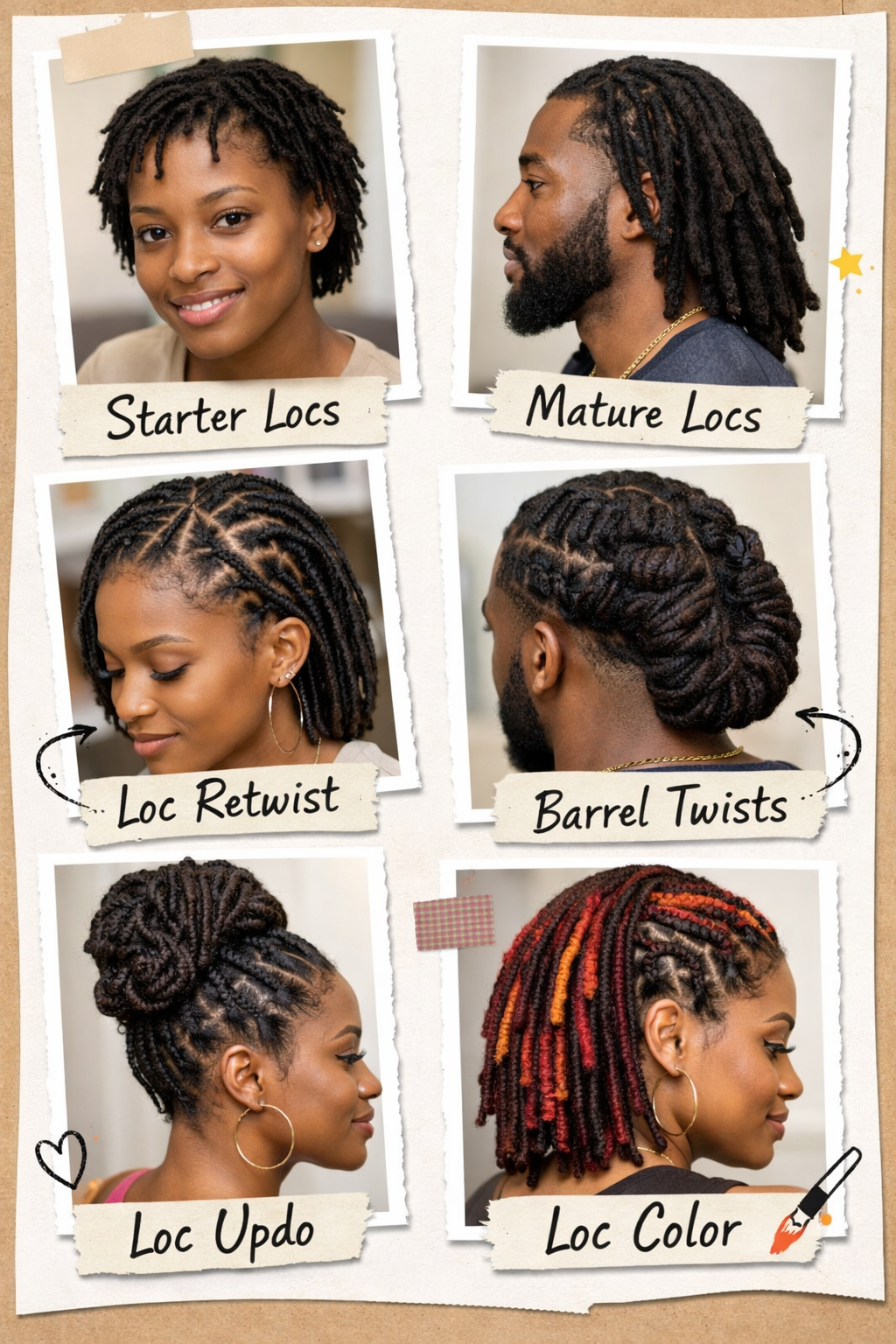
The loc journey: from starter stages to styling
Starter Locs
Men + WomenAlso called: baby locs • two-strand twists • coils • braidlocs • 18.2k monthly searches
What it is: The beginning of the loc journey. Hair is sectioned and twisted, coiled, or braided to begin the locking process. At this stage, locs look like twists or braids they haven't yet fused into solid locs.
Who it's for: Anyone starting their loc journey. Works on all hair types but most common on type 4 hair. Men and women both start locs at this stage.
How it's done: Hair is parted into sections (usually squares or triangles). Each section is twisted (two-strand twists), coiled (comb coils), or braided. The style lasts 4-8 weeks before needing maintenance.
What to expect: This stage lasts 6-12 months. Hair will look fuzzy and may unravel. This is normal. Trust the process.
Products you'll need:
- Lightweight oil – for scalp, not locs
- Rosewater spray – for moisture without buildup
- Residue-free shampoo – regular shampoo leaves buildup
- Satin scarf or bonnet – for sleeping
Why it matters: How you start determines how your locs mature. Patience at this stage pays off for years to come.
Mature Locs
Men + WomenAlso called: established locs • settled locs • 14.5k monthly searches
What it is: After 12-18 months, locs have fully formed. They're no longer fuzzy or loose. They hang with weight and move like ropes. The hair has locked into its permanent texture.
Who it's for: Anyone who has made it through the starter phase. You've put in the time, now you get to enjoy them.
What changes: Maintenance becomes about health, not formation. You can style them more freely. They're stronger and less likely to unravel.
Products you'll need:
- Lightweight moisturizer – spray or leave-in
- Clarifying shampoo – occasionally to remove buildup
- Essential oils – for scalp health
Why it matters: Mature locs offer versatility. You've earned the freedom to style, color, and experiment.
Loc Retwist
Men + WomenAlso called: maintenance • fresh parts • 12.8k monthly searches
What it is: New growth at the roots is twisted down to maintain parting and a neat appearance. Done every 4-8 weeks depending on how fast your hair grows and how defined you like your parts.
Who it's for: Anyone with locs who wants to maintain a neat look. Some people prefer a more natural, fuzzy look and retwist less often.
How it's done: New growth is twisted with gel or cream. Can be done with or without a hooded dryer. After retwisting, parts are clean and roots are smooth.
Products you'll need:
- Locking gel or cream – for hold
- Oil for scalp – before retwisting
- Hooded dryer – to set the style (optional)
- Edge control – if you want sleek edges
Why it matters: Regular maintenance keeps locs healthy and looking intentional. Find a rhythm that works for your lifestyle.
Barrel Twists
Men + WomenAlso called: rope twists • thick twists • 9.3k monthly searches
What it is: Locs twisted into thick, rope-like sections. Can be done on mature or starter locs. The twists are larger than two-strand twists, giving a different texture and look.
Who it's for: Anyone wanting a defined, polished look. Great for protecting ends. Lasts 2-4 weeks depending on how well you maintain them at night.
How it's done: Locs are twisted around each other in sections. Usually done after a fresh retwist. Can be styled into updos or left hanging.
Products you'll need:
- Locking gel – for hold during twisting
- Mousse – for light hold and shine
- Satin scarf – at night to preserve twists
Why it works: Creates defined texture while protecting locs. A versatile style that works for weeks.
Loc Updo
Men + WomenAlso called: loc bun • loc style • pinned locs • 11.2k monthly searches
What it is: Locs gathered and styled into an updo buns, French twists, pin-ups, half-up styles. Shows the versatility of locs beyond just wearing them down.
Who it's for: Anyone with medium to long locs. Perfect for weddings, formal events, or keeping locs contained during workouts.
How it's done: Locs are sectioned and pinned with loc-friendly pins. Can be simple (one bun) or intricate (twisted updos).
Products you'll need:
- Loc pins or bobby pins – larger than regular pins
- Styling gel – for edges if desired
- Shine spray – for finished look
Why it works: Elevates locs for special occasions. Shows the range of what locs can do.
Loc Color
Men + WomenAlso called: dyed locs • colored locs • 8.9k monthly searches
What it is: Adding color to locs whether full dye, highlights, or just the ends. Requires more moisture care afterward as color can dry hair.
Who it's for: Anyone who wants to express themselves through color. Works on all loc stages, but mature locs handle color better than starters.
Considerations: Color can dry locs out. You'll need extra moisture. Some people dye just the ends for an ombré effect, others go all in.
Products you'll need:
- Color-safe shampoo – gentle on colored hair
- Deep conditioner – extra moisture after color
- Leave-in moisturizer – daily maintenance
Why it works: Personalizes your locs. Adds dimension and self-expression to an already meaningful style.
Common Questions About Locs
How long does it take for locs to mature?
Most locs take 12-18 months to fully mature. The starter stage lasts 6-12 months, during which hair is still locking. After 18 months, locs are typically settled and behave like mature locs.
Can you wash starter locs?
Yes, but carefully. Use residue-free shampoo and focus on scalp, not locs. Let them dry completely to prevent mildew. Many people wait 2-4 weeks before first wash.
How often should you retwist locs?
Every 4-8 weeks is typical. Some people go longer for a more natural look. Retwisting too often can cause thinning at the roots. Find what works for your hair.
Can you color locs without damaging them?
Yes, but proceed carefully. Mature locs handle color better than starters. Always deep condition after coloring. Consider a professional who understands locs.