You follow routines for your type. You buy products recommended for your pattern. And yet.
Nothing works.
Your hair is either greasy or dry. Frizzy or undefined. Too limp or too stiff. And you're starting to wonder if the problem isn't your hair it's how you've been labeling it.
Here's the thing: most people misidentify their hair type. Not because they're careless. Because curl charts are oversimplified and hair is complicated.
But your hair has been sending you signals. You just haven't known how to read them.
Here are five clear signs you've got your type wrong.
Sign 1: Products for "Your Type" Always Fail
This is the biggest red flag.
You read that 3B hair needs lightweight curl creams. You buy one. Your hair feels greasy and falls flat by noon. You read that 4C hair needs heavy butters. You try one. Your hair feels coated but still dry underneath.
What's actually happening: If products specifically marketed for your type consistently fail, you're probably not that type.The exception: sometimes it's porosity, not pattern. But if you've tried multiple products across different brands and nothing clicks? Your label is wrong.
Try this instead: Stop shopping by type. Start shopping by behavior.- Does your hair hate heavy products? You might be wavy or low porosity, regardless of curl size.
- Does your hair drink up everything and ask for more? You might be coily or high porosity.
- Does your hair need hold but not weight? You might be curly, even if your curls are loose.
Sign 2: Your Roots and Ends Look Completely Different
Stand in front of a mirror. Part your hair in several places. Look at the roots. Now look at the ends.
If they're different, you have one of three problems: Problem 1: Heat damage. Your ends have been straightened by hot tools. They're looser than your natural pattern. You're not a mix of types. You have damage. Problem 2: Chemical damage. Color, bleach, relaxers they change curl structure permanently. What grows from your scalp is your real type. Everything else is history. Problem 3: Product buildup. Heavy products accumulate on ends, weighing them down and hiding their true pattern. The roots show the truth because they're newer and less manipulated.New growth at the roots is your hair's honest statement. If your roots are coiling tight but your ends are waving loose, your real type is whatever the roots are doing.
3C vs 4A Hair: What's the Difference? Tight curls or soft coils? Your roots know.Sign 3: Your Hair Behaves Differently in Different Sections
The front curls perfectly. The back is a frizz factory. The left side spirals. The right side just hangs there.
You've been calling yourself one type based on your best section. But your whole head didn't get the memo.
Here's the truth: Most people have 2-3 patterns on their head. The crown is often looser. The nape is often tighter. The front hairline does whatever it wants.If you've been identifying by your best curls, you buy products for that pattern, the tighter sections stay under-moisturized, the looser sections get weighed down, and everyone's unhappy.
What your hair is telling you: You're not one type. You're a combination. And you need to either treat for the tighter pattern (it's needier), or section your routine (more work, better results).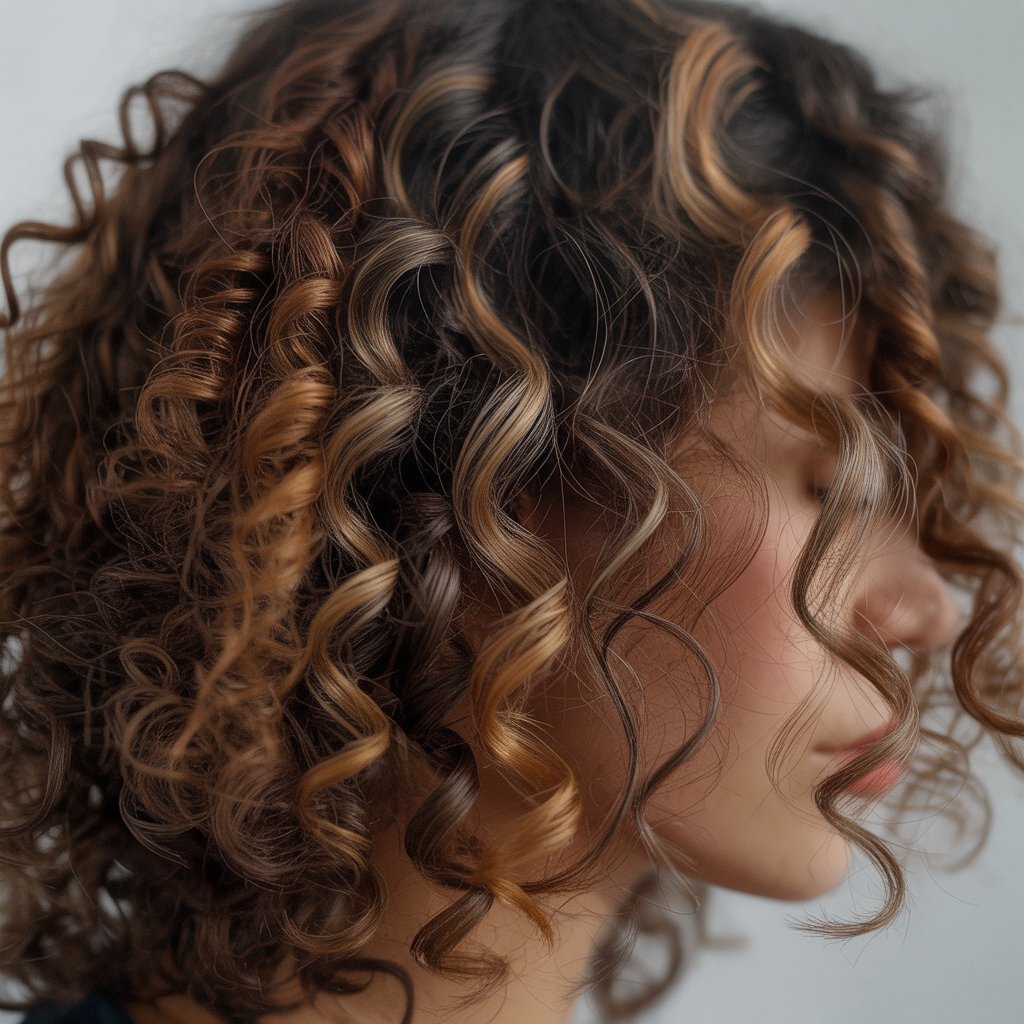 How to Identify Your Curl Pattern Correctly The section-by-section method catches what charts miss.
Sign 4: Your Hair Changes Dramatically With Weather
You have a routine that works. Then humidity hits. Or winter arrives. Or you travel somewhere with different water. Suddenly your hair is unrecognizable. And you're blaming the weather.
But here's what's really happening: Your actual type is more sensitive to environment than you thought. Wavy hair goes almost straight in dry air. Gets poofy (not curly) in humidity. Curly hair tightens in humidity. Loosens in dry air. But the pattern remains visible. Coily hair shrinks more in humidity. Expands in dry air. But always coils.If your hair completely transforms like, you can't even recognize it you might be wavy pretending to be curly, curly with damage pretending to be wavy, or coily with product weighing it down.
What weather reveals: Humidity is truth serum for hair. It shows what your hair wants to do when given permission. Pay attention next time it rains. Your frizz tells a story. Why Humidity Ruins Curly Hair What weather exposes about your real texture.Sign 5: You've Never Seen Your Hair With Zero Products
This is the big one.
You always use something. Leave-in. Curl cream. Gel. Mousse. Oil. Something. You have no idea what your hair looks like completely naked.
Why this matters: Products manipulate texture. They weigh hair down (creams, butters), fake definition (gels, mousses), stretch patterns (oils), and shrink patterns (some leave-ins). You're not seeing your hair. You're seeing what you put on it. The test: One time only. Clarify with a sulfate shampoo. Use nothing after. No conditioner. No leave-in. No products. Air dry completely. Don't touch it. What you'll learn:- Your actual shrinkage (not product-enhanced)
- Your real frizz level (not product-masked)
- Your true pattern (not gel-defined)
- Your porosity clues (how fast it dries)
This is your baseline. Everything else is styling.
Bonus Sign: You're Always Chasing "The Perfect Routine"
You try a routine. It works for two weeks. Then it stops. You switch products. Same cycle. You watch influencers with "your type" and copy them. Doesn't work.
What's actually happening: If nothing sticks, you're solving the wrong problem. You're treating symptoms based on a misdiagnosis.If you're actually wavy but treating yourself as curly, you use too-heavy products, your hair gets greasy, you think you need more moisture (wrong), and you add more heavy products (disaster).
If you're actually coily but treating yourself as curly, you use products without enough moisture, your hair feels dry, you think you need protein (maybe wrong), and you add protein and get brittle.
The routine chase ends when the diagnosis is right.
What to Do Next
If Sign 1 hit: Stop shopping by type. Start by behavior. If Sign 2 hit: Look at your new growth. That's your real hair. If Sign 3 hit: You're multiple types. Welcome to humanity. If Sign 4 hit: Humidity is your friend. It tells the truth. If Sign 5 hit: Do the naked test. Today. If multiple hit: You're not alone. Most people are in this boat.The Problem With Labels
Hair typing was invented to sell products. To categorize. To simplify. But hair isn't simple. It's affected by porosity, density, strand thickness, elasticity, scalp health, water hardness, climate, hormones, stress, and diet.
Your curl pattern is one factor. Important? Yes. The whole story? Never.
From Misidentified to Understood
You don't need the perfect label. You need to understand what your hair actually does.
The Hair Routine Generator doesn't ask "what's your type?" and call it done. It asks about behavior how does your hair feel after washing? How does it react to humidity? How long does it take to dry? What happens when you sleep on it?
Two minutes. No charts. Just questions that actually matter. Find What Your Hair Needs →Quick Recap: The 5 Signs
- Products for your type always fail you're probably not that type
- Roots and ends look different roots tell the truth
- Different sections behave differently you're multiple types
- Hair changes dramatically with weather humidity reveals reality
- Never seen your hair with zero products do the naked test